Endometriosis and Fertility: What NICE's New 2026 Treatment Pathway Means for You
NICE's NG257 update gives endometriosis its own fertility pathway. See what changed, how the pathway works, and what it means if you're trying to conceive.
Read More




Many women still conceive naturally after the age of 35. However, fertility does gradually decline with age due to changes in both egg quantity and egg quality. Understanding how fertility changes over time can help individuals and couples make informed decisions, seek timely fertility assessment, and explore treatment options earlier if needed.
As more women choose to start families later due to career, relationships, finances, or personal circumstances, questions around fertility after 35 have become increasingly common. While age is one of the most important factors affecting female fertility, every fertility journey is individual.
This article explains what happens to fertility after 35, how age affects egg quality and ovarian reserve, and when it may be helpful to seek fertility advice.
**
Women are born with all the eggs they will ever have. At birth, the ovaries contain around one to two million egg containing sacs called follicles. By puberty, this number falls to approximately 400,000.
Each month, many follicles (estimated to be around 1000) begin developing, but usually only one releases an egg during ovulation. The remaining follicles naturally disappear over time. This gradual decline in the pool of follicles (ovarian reserve or egg reserve) is a natural part of reproductive ageing. In addition, with advancing age, the eggs are more likely to have chromosomal abnormalities.
Hence, fertility typically declines with advancing age, slowly during the early thirties, but the decline becomes more noticeable after the age of 35 and accelerates further after 37 to 40 years of age.
According to the Human Fertilisation and Embryology Authority (HFEA), the average age of patients having fertility treatment in the UK is now over 35 years old*. This makes it even more important to have open conversations and consider fertility assessments around this age if you haven’t already. The window for planning, testing and treatment becomes more time‑sensitive after 35 years of age.
If you would like to understand more about age-related fertility changes, visit our page on female age and fertility.
Many people hear the phrase “biological clock”, but fertility decline is not simply about having fewer eggs.
The egg numbers and the quality of eggs are important for fertility.
The egg reserve declines with age, and hence fewer eggs remain available for ovulation and conception.
Tests such as AMH blood testing and pelvic ultrasound scan for antral follicle count (AFC) can help assess egg reserve.
You can learn more about this in our article on egg reserve testing: AMH and AFC.
Egg quality also changes with age.
As women get older, eggs are more likely to have chromosomal abnormalities. This can reduce the chances of embryo formation and implantation and increase the risk of miscarriage.
It is estimated that the percentage of chromosomal abnormalities within the eggs which is around 30% for women less than 35 years of age, increases significantly to at least 70% by the age of 40*
This is one reason why pregnancy rates decline with age, even with fertility treatments such as IVF/ICSI.
Our article on egg quality vs egg quantity explains these concepts in greater detail.
Many women ask:
Many women conceive naturally in their late thirties. However, conception may take longer compared with women of younger age group. Fertility decline is gradual rather than sudden and is progressive with age.
The NICE suggests that around 8 out of 10 couple in a heterosexual relationship conceive within the first year of trying for pregnancy with regular unprotected intercourse, which gradually declines with age:
The IVF/ICSI treatment success also declines with age. The HFEA reports that following IVF/ICSI treatment, the live birth rate (AND pregnancy rate) per embryo transferred will be:
These figures show that while pregnancy after 35 is certainly possible, age remains an important fertility factor.
Although age is one of the important factors for fertility, other health and lifestyle conditions also influence reproductive health.
Certain lifestyle factors can affect fertility, including:
Maintaining a healthy body weight is important to support reproductive health, and you may find these articles helpful:
Conditions such as:
may also affect fertility.
Related resources:
One of the most common patient questions is:
“When should I seek fertility help after 35?”
The NICE recommends earlier fertility assessment for women aged 36 and above rather than waiting a full year.
Apart from female age, there are many other circumstances where fertility assessment may be considered after six months of trying to conceive without success.
A fertility evaluation may include:
At JIVA Fertility, we offer personalised fertility evaluation and consultant-led fertility care.
You can also read:
Many patients ask whether lifestyle changes can improve egg quality naturally.
Healthy lifestyle changes may support overall reproductive health, including:
However, it is important to understand that lifestyle changes cannot completely reverse natural age-related decline in egg quality or other factors such as tubal damage.
As the window for planning, testing and treatment becomes more time‑sensitive after 35 years, if pregnancy has not happened after 6 months of trying, appropriate assessment is suggested before continuing to try for pregnancy.
For some individuals, fertility preservation or egg freezing may also be considered.
Learn more about fertility preservation options.
Fertility treatment depends on individual circumstances, fertility history, test results, and reproductive goals.
Treatment options may include:
Relevant service pages:
Early fertility planning often provides more options and may improve treatment outcomes.
Although statistics and fertility trends are important, fertility remains highly individual.
Many women conceive naturally in their late thirties and early forties, while others may experience fertility challenges earlier.
Age is an important factor, but it is only one part of the bigger picture.
Understanding your fertility earlier allows you to make informed decisions and seek support when needed.
At JIVA Fertility, we believe fertility care should be compassionate, evidence-based, and personalised to every patient’s journey.
A: No. Fertility decline is gradual, but the decline becomes more noticeable after the mid-thirties.
A: Yes. Many women conceive naturally after 35, although conception may take longer.
A: Egg reserve is commonly assessed using a blood test for AMH and a pelvic ultrasound for antral follicle count (AFC), which are the good markers of egg reserve.
A: IVF success rates decline with age, particularly after 40, but pregnancy is still possible depending on individual circumstances.
A: Women aged 35 or above are advised to seek fertility assessment after six months of trying to conceive. Additional factors as explained above should help you decide if you should see a fertility specialist sooner than 6 months.
If you have questions about fertility after 35, egg reserve testing, or fertility treatment options, our team at JIVA Fertility is here to support you.
You can book a fertility consultation to discuss your fertility goals and receive personalised guidance.
Disclaimer: This article is intended for educational purposes and does not replace individual medical advice. Please consult a healthcare provider for assessment and treatment decisions.
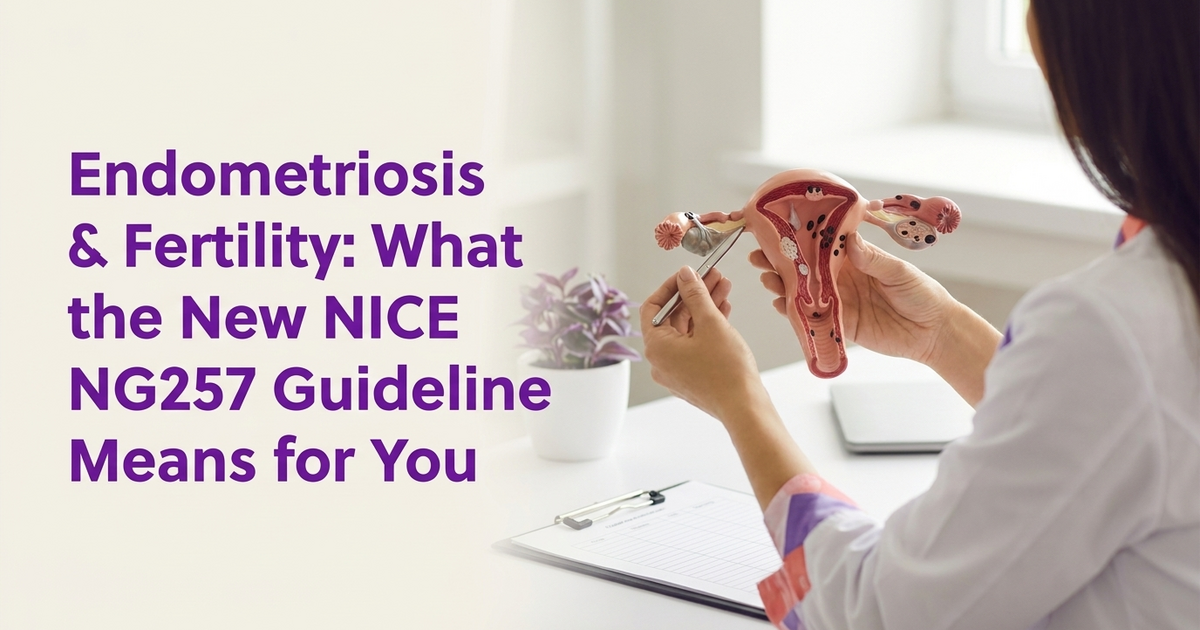
NICE's NG257 update gives endometriosis its own fertility pathway. See what changed, how the pathway works, and what it means if you're trying to conceive.
Yorkshire and Humber ICB's fund one NHS IVF/ICSI cycle, below NICE's recommended three. See the exact eligibility criteria, what counts as a cycle, and when private care makes sense.