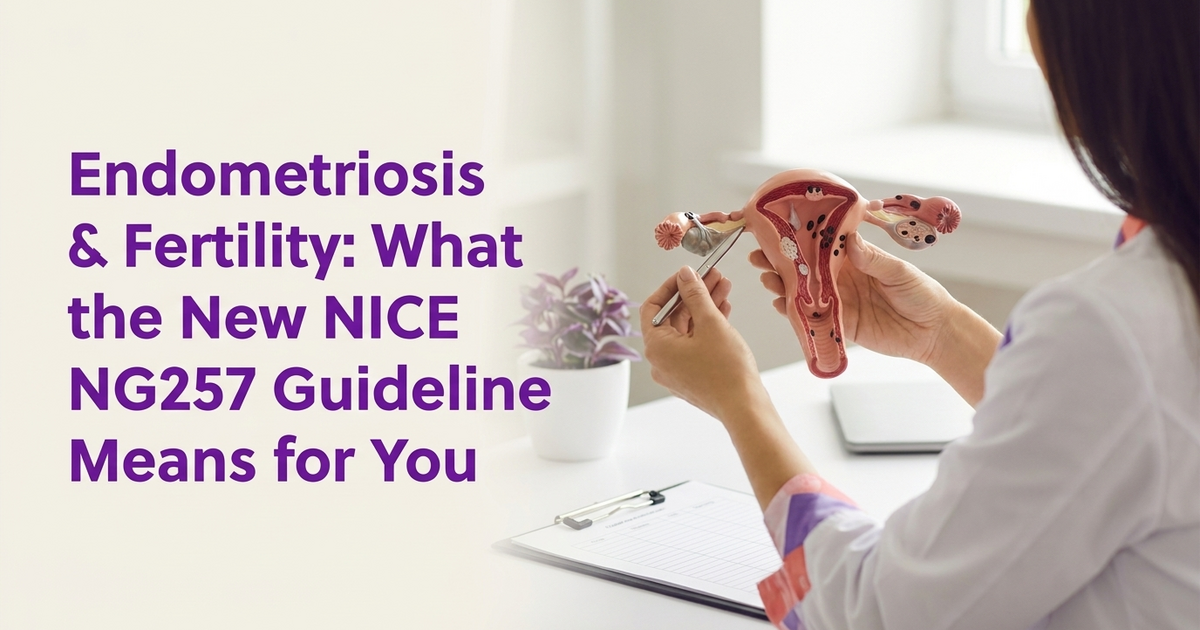
Endometriosis is a common condition where tissue similar to the lining of the womb grows outside the uterus. For some women it can cause chronic pain and make it more difficult to conceive. The good news is that many women with endometriosis still become pregnant naturally, and if you have experienced difficulty conceiving, surgery or fertility treatments can improve the chances of pregnancy. Understanding the symptoms, diagnosis, and treatment options can help you take the right next steps in your fertility journey.
Understanding Endometriosis
Endometriosis is a chronic inflammatory condition in which cells/tissue similar to the lining of the womb grows in places where it should not. These growths can occur on the lining of the pelvis (peritoneum), ovaries, fallopian tubes, or other pelvic organs and rarely in the upper abdomen or even chest.
Each menstrual cycle, the cells of the lining of the womb respond to the hormones produced by the ovaries which help prepare the lining of the womb ready for embryo implantation. If the pregnancy does not happen, the prepared lining of the womb is shed and women experience menstrual bleeding. Endometriosis cells also respond to the hormones produced by the ovaries, however, as these cells cannot leave the body easily, causes inflammation and sometimes scar tissue, which are responsible for the symptoms of endometriosis.
According to UK data, endometriosis affects around 1 in 10 women of reproductive age*. For some women the condition causes little disruption, while for others it can significantly affect daily life and fertility.
Where Endometriosis Can Occur
Endometriosis is most commonly found in the pelvic area, including:
- Lining of the pelvis/abdomen called peritoneum
- Ovaries
- Fallopian tubes
- Ligaments supporting the uterus
- In advanced cases endometriosis affect bowel, bladder and ureters.
What Causes Endometriosis?
The exact cause for development of endometriosis is not fully understood. One widely accepted explanation is retrograde menstruation, where menstrual blood flows backwards through the fallopian tubes into the pelvis.
Other possible factors include:
- Genetic predisposition
- Immune system changes
- Hormonal influences
- Environmental factors
- Most likely a combination of several factors
While these mechanisms are still being studied, specialists recognise that endometriosis is a complex condition that can affect many aspects of reproductive health.
Endometriosis Symptoms Women Should Not Ignore
Symptoms can vary widely. Some women have no symptoms at all, while others experience severe disruption of quality of life.
Common symptoms include:
- Painful periods
- Chronic pelvic pain
- Heavy menstrual bleeding
- Pain during intercourse
- Fatigue
- Discomfort or Pain when opening bowels or passing urine
- Bloating (“endo belly”)
- Difficulty getting pregnant - 30-50% women with endometriosis experience difficulty conceiving.
None of the symptoms are diagnostic of endometriosis, however, if you are experiencing multiple symptoms, you are more likely to have endometriosis.
If symptoms are severe or persistent, it may be helpful to seek specialist advice through a fertility evaluation.
You can learn more about the assessment process here:
https://www.jivafertility.co.uk/services/fertility-evaluation
Early evaluation can help identify whether endometriosis or another condition may be affecting fertility.
How Does Endometriosis Affects Fertility?
Many patients ask the question: Can you get pregnant with endometriosis? The answer is yes. Many women conceive naturally. However, the condition can reduce fertility for many others.
Research suggests the monthly chance of conception will be lower in women with endometriosis, compared with those without the condition.* For some women the chances are next to nil if they have severe endometriosis completely damaging both fallopian tubes and pelvis,
Several mechanisms may explain this.
Changes to Pelvic Anatomy
Endometriosis can lead to inflammation, and scar tissue (adhesions) around fallopian tubes/ovaries. These may make it harder for the egg and sperm to meet.
Effects on the Ovaries
Ovarian cysts known as endometriomas (chocolate cysts) can develop in some patients. These cysts may affect egg reserve, which refers to the pool of remaining eggs in the ovaries.
You can read more about egg reserve testing here:
https://www.jivafertility.co.uk/blogs/egg-reserve-testing-amh-afc
Inflammation in the Pelvic Environment
Endometriosis can create an inflammatory environment that may affect:
- Egg quality
- Sperm function
- Fertilisation of eggs
- Embryo implantation
For this reason, fertility treatment may sometimes be recommended.
How Endometriosis Is Diagnosed
Endometriosis diagnosis can take years, and often there is a diagnostic delay of up to seven years. Diagnosis usually begins with a detailed medical history. Clinical examination of the abdomen and pelvis (internal examination) may be normal for some women.
Specialists may recommend:
- Ultrasound scan of the pelvis (generally internal scan) to identify ovarian cysts, and/or pelvic adhesions
- MRI scan of the pelvis, if deep endometriosis is suspected
The gold standard diagnosis is laparoscopy, a minimally invasive surgical procedure performed where a camera is passed into the abdomen through a cut in the belly button (umbilicus), under general anaesthesia (by putting you to sleep) that allows specialists to assess your pelvis and fallopian tubes, diagnose endometriosis, classify endometriosis to appropriate staging and surgically treat early stages endometriosis and mild pelvic adhesions (scarring) at the same time. A dye test will be performed at the same time to check if fallopian tubes are patent (open).
Endometriosis is classified at laparoscopy as Stage I (Minimal), Stage II (Mild), Stage III (Moderate) and Stage IV (Severe), depending on the extent of the disease. However, the severity of symptoms do not correlate with the stage of endometriosis - women with Stage I endometriosis can have severe symptoms whereas, some women with Stage IV disease may have no or minimal symptoms.
Treatment Options for Endometriosis associated Infertility
Treatment plans are personalised based on several factors including:
- Age
- Symptoms
- Severity of the disease
- Duration of infertility
- Other factors for infertility
Management may involve medical treatment, surgery, or assisted reproductive technologies.
Managing Symptoms
Hormonal treatments help suppress endometriosis activity and may reduce symptoms. However, these treatments are not usually recommended for women trying to conceive as they have contraceptive effects.
Non-hormonal medications such as pain killers and medications that can help the blood to clot may be used to reduce the symptoms.
Lifestyle modifications with changes to diet, regular exercise, stress management and Complementary therapies (acupuncture, physiotherapy) may help some women.
Surgical Treatment
In some cases surgery may help improve natural fertility by treating endometriosis lesions and/or by dividing the scar tissue. This is particularly relevant in milder forms of the disease or when ovarian cysts are present as surgical management for these conditions has been shown to improve natural fertility after surgery.
There is lack of evidence from studies to suggest surgery for severe endometriosis affecting bowel and bladder, will improve natural fertility. However, if surgery for severe (Stage IV) endometriosis is needed for the management of your symptoms, you will need a referral via GP to an Advanced Endometriosis Centre.
There is lack of good quality studies to recommend surgery before IVF/ICSI treatment to improve IVF/ICSI success. However, surgery can be considered for removal of endometrioma if causing symptoms or expected to cause difficulty with fertility treatment or in pregnancy AND/OR for removal or apply clips to the damaged fallopian tubes with fluid accumulation within the fallopian tube (hydrosalpinx) before IVF/ICSI treatment, as the fluid reduces IVF/ICSI success rates.
Learn more here:
https://www.jivafertility.co.uk/services/reproductive-surgery
Assisted Reproductive Treatments
For many couples, assisted reproductive technologies provide the most effective pathway to pregnancy.
Intrauterine Insemination (IUI) treatment
IUI treatment may be considered in selected cases where the fallopian tubes are healthy with Stage I or Stage II endometriosis (surgically treated) and there are no other factors for infertility.
IVF/ICSI treatment
For moderate or severe endometriosis, IVF treatment may offer the best chance of pregnancy. If there are associated sperm abnormality, ICSI treatment will be required.
Learn more about IVF/ICSI here:
https://www.jivafertility.co.uk/services/ivf-icsi
Large studies have shown that endometriosis alone does not reduce IVF success rates and will be similar to those with other causes of infertility. However the success rates will be lower if endometriosis is associated with other factors for infertility.
Fertility Preservation (Egg Freezing) in Endometriosis
Endometriosis and surgery for ovarian cysts (endometrioma) or severe endometriosis can affect egg reserve (pool of eggs in the ovaries), which can be as high as 50% reduction in egg reserve markers with removal of ovarian endometriomas from both ovaries.
For women who are not yet ready to conceive, fertility preservation can be considered.
Options include:
- Mature Egg freezing
- Embryo freezing
- Ovarian tissue preservation - available only in specialist centres
Learn more about fertility preservation services:
https://www.jivafertility.co.uk/services/fertility-preservation
Expert Fertility Care at JIVA
This article has been clinically reviewed by Mr Harish Bhandari, Consultant Gynaecologist and a Sub-specialist in Reproductive Medicine and Surgery and is one of the co-authors of ‘Evidence based management of patients with endometriosis undergoing assisted conception: British Fertility Society Policy and Practice Recommendations’.
You can learn more about Mr Harish Bhandari here:
https://www.jivafertility.co.uk/our-experts/dr-harish-bhandari
At JIVA Fertility we understand that conditions such as endometriosis can make the journey to parenthood feel uncertain. Our team provides personalised, consultant led fertility care based on the latest evidence and UK clinical guidelines.
Frequently Asked Questions
Q: Can endometriosis cause infertility?
A: Yes, endometriosis can affect fertility in several ways, including inflammation, ovarian cysts, and scar tissue that may affect the fallopian tubes or implantation. It is estimated that 30-50% of women with endometriosis experience difficulty conceiving.
Q: Can you get pregnant naturally with endometriosis?
A: Many women with endometriosis conceive naturally. However, if pregnancy does not occur after six to twelve months of trying for pregnancy, fertility assessment will be helpful.
Q: Does IVF work for women with endometriosis?
A: Yes. IVF is often recommended for moderate or severe endometriosis and can offer good pregnancy outcomes for many couples.
Q: When should I see a fertility specialist?
A: If you have symptoms of endometriosis, or ovarian cyst identified on a pelvic ultrasound scan, and have been trying to conceive for 6 to 12 months without success, it may be helpful to seek fertility advice.
Take the Next Step in Your Fertility Journey
If you have been diagnosed with endometriosis or are experiencing symptoms that may affect fertility, early assessment can help guide the right treatment plan.
You can book a fertility consultation with our team here:
https://www.jivafertility.co.uk/appointment
We are here to support you with clear information, personalised care, and compassionate guidance throughout your fertility journey.
References
Endometriosis UK. Endometriosis facts and statistics. https://www.endometriosis-uk.org
NICE Guideline NG73. Endometriosis diagnosis and management. https://www.nice.org.uk/guidance/ng73
NHS. Endometriosis overview. https://www.nhs.uk/conditions/endometriosis
ESHRE Guideline. Management of women with endometriosis.
Disclaimer: This article is intended for educational purposes and does not replace individual medical advice. Please consult a healthcare provider for assessment and treatment decisions.