Endometriosis and Fertility: What NICE's New 2026 Treatment Pathway Means for You
NICE's NG257 update gives endometriosis its own fertility pathway. See what changed, how the pathway works, and what it means if you're trying to conceive.
Read More


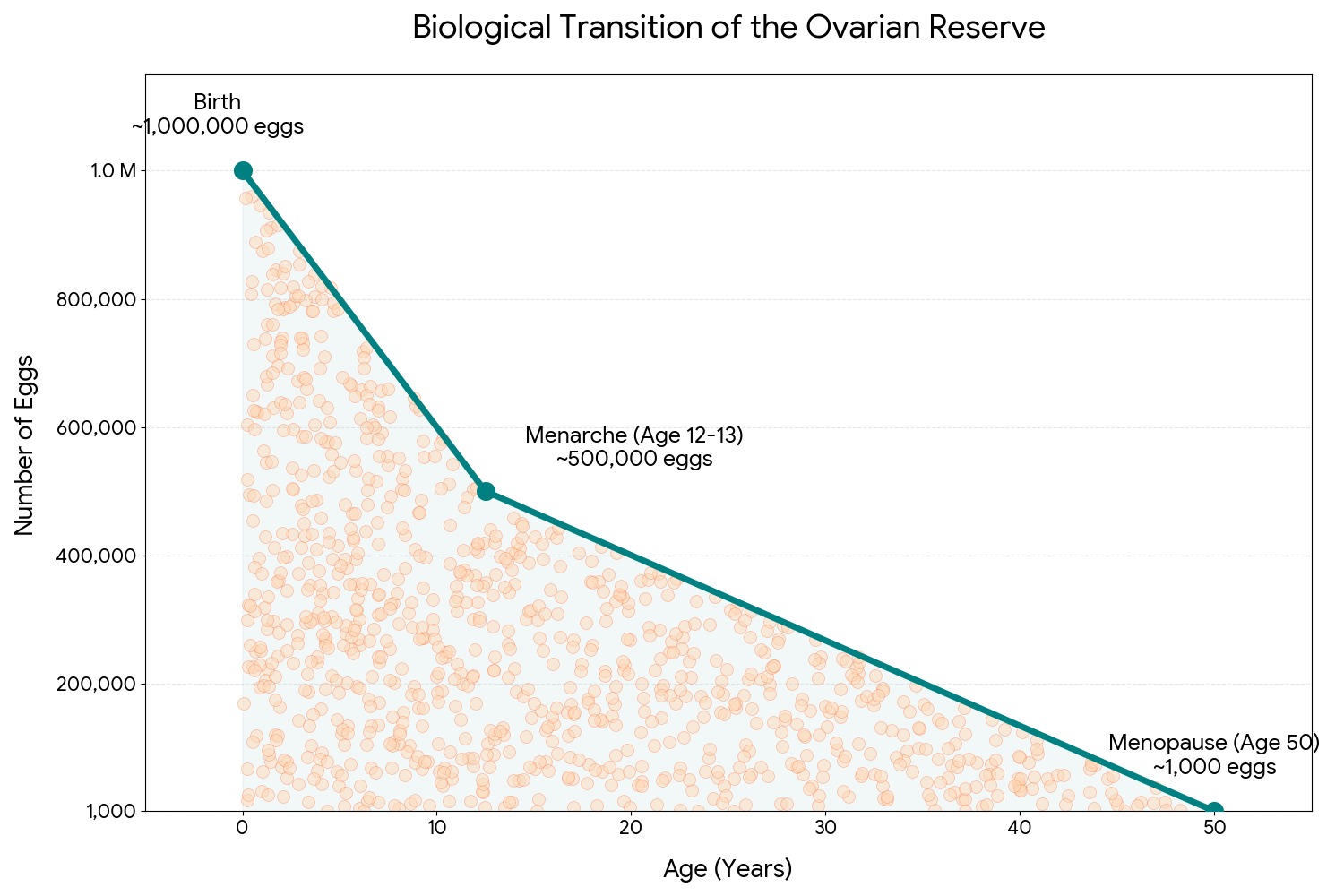
The number of eggs in your ovaries (ovarian reserve) declines with advancing age and unfortunately, cannot be increased. While you are born with a fixed number of eggs, your lifestyle, health, and environment can impact how those eggs develop and your chances of pregnancy.
Egg quantity refers to the number of eggs present in the ovaries, often measured through by a blood test for AMH (Anti-Müllerian Hormone) and an ultrasound scan of the pelvis for antral follicle count (AFC) in the ovaries. Women are born with all the eggs they will ever have, and this number naturally declines with age.
If you want to understand how this is assessed, you can read more about egg reserve testing here: https://www.jivafertility.co.uk/blogs/egg-reserve-testing-amh-afc
Egg quality refers to how healthy and genetically normal an egg is. Good egg quality increases the chances of successful fertilisation, embryo development, and implantation.
A common question patients ask is: what is the difference between egg quality and quantity?
You can have a lower number of eggs but still achieve pregnancy if the quality is good.
A woman is born with around 1 to 2 million eggs, and this reduces to about 300,000 to 500,000 by puberty. Over time, the number continues to decline naturally as about 1000 of these are used in each menstrual cycle to produce one egg.
By the mid-30s, the decline becomes more noticeable, and both quantity and quality reduce with age.
You can explore more about this here: https://www.jivafertility.co.uk/services/female-age-and-fertility
Having a low egg reserve does not mean you cannot get pregnant. It simply means the window of opportunity may be shorter, and the approach may need to be more personalised.
Egg quality directly influences whether fertilisation occurs and whether the embryo develops normally.
Poor egg quality can increase the risk of chromosomal abnormalities in the embryos, which increases the chances of a miscarriage.
In fertility treatments such as IVF, egg quality plays a significant role in determining success rates.
Age remains the most significant factor affecting egg quality. As age increases, the likelihood of chromosomal abnormalities within the remaining eggs is high. It has been shown in studies that the percentage of chromosomally normal eggs at the age of 30 is 70%, which declines to 50% by age 35, 25% by age 40 and 5% by age 45.
Smoking, alcohol, excessive caffeine, being overweight and obese, lack of regular exercises and poor sleep can negatively affect egg health.
A balanced, nutrient-rich diet supports hormonal balance and overall reproductive health.
You can read more about lifestyle changes here: https://www.jivafertility.co.uk/services/lifestyle-modifications
You can also explore nutrition guidance here: https://www.jivafertility.co.uk/blogs/optimising-fertility-with-evidence-based-nutrition-supporting-your-journey
Genetics and environment during development inside your mother’s womb determine the number of eggs you are born with. Conditions such as endometriosis, ovarian cysts, surgeries on the ovaries, cancer treatment with Chemo/radiotherapy can influence egg quantity and quality.
Eggs go through a maturation process of approximately 90 days before ovulation. This means your lifestyle and health during this time can influence egg quality.
Focus on whole, home-cooked meals, healthy fats, and antioxidants. Avoid processed foods and refined sugars.
Certain supplements may be recommended by your clinician depending on your individual needs.
Yes, many women with low egg reserve conceive naturally or with support.
If you have been trying to conceive without success or have concerns about your fertility, seeking early advice can help.
Every patient is different. Treatment options may include ovulation induction, IUI, or IVF depending on your situation.
You can explore fertility evaluation here: https://www.jivafertility.co.uk/services/fertility-evaluation
Blood test for serum AMH and ultrasound scan of the pelvis for antral follicle count (AFC) are commonly used and good markers of egg reserve.
Our consultants can guide you with investigations, personalised treatment plans, and emotional support.
A: While egg quality cannot be completely changed, it can be supported through lifestyle, nutrition, and overall health improvements.
A: No. Many women with low egg reserve conceive naturally or with treatment.
A: Egg quantity refers to the number of eggs, while egg quality refers to how healthy those eggs are.
A: Yes. Factors such as smoking, diet, sleep, being overweight/underweight and stress can impact egg quantity, quality and overall fertility.
If you have concerns about egg quality, egg reserve, or your fertility journey, you can book a consultation here.
Disclaimer: This article is intended for educational purposes and does not replace individual medical advice. Please consult a healthcare provider for assessment and treatment decisions.
NICE's NG257 update gives endometriosis its own fertility pathway. See what changed, how the pathway works, and what it means if you're trying to conceive.
Yorkshire and Humber ICB's fund one NHS IVF/ICSI cycle, below NICE's recommended three. See the exact eligibility criteria, what counts as a cycle, and when private care makes sense.