Endometriosis and Fertility: What NICE's New 2026 Treatment Pathway Means for You
NICE's NG257 update gives endometriosis its own fertility pathway. See what changed, how the pathway works, and what it means if you're trying to conceive.
Read More


Baby Loss Awareness Week runs from 9 to 15 October each year, a time to remember the babies no longer with us and to acknowledge the real impact pregnancy loss has on individuals and families. Whether you are grieving a recent loss, investigating why it happened, or preparing for a future pregnancy, that experience is valid.
Recurrent miscarriage is broadly defined as the loss of two or more pregnancies, though what counts as recurrent miscarriage differs slightly between the RCOG, ESHRE and ASRM. Our approach is a detailed review of your history, targeted investigations such as pelvic ultrasound, relevant blood tests and where appropriate, further tests to include genetic testing, hysteroscopy, sperm DNA Fragmentation testing, endometrial assessment etc, and then a treatment plan built around what those results show, not a standard protocol.
No investigation or treatment plan can guarantee a particular result, and outcomes vary between individuals.
Alongside clinical investigations and treatment, our Senior Specialist Fertility Counsellor, Angela Pericleous-Smith, who chairs the British Infertility Counselling Association, provides dedicated emotional support for patients who have experienced recurrent pregnancy loss.
The UK's new statutory bereavement leave for pregnancy loss gives a day-one right to up to two weeks of unpaid leave to anyone in Great Britain who loses a pregnancy before 24 weeks, including after a failed embryo transfer. It also covers partners and intended parents in a surrogacy arrangement, and the days can be taken separately within 56 weeks of the loss, with no evidence required.
Key takeaways
Confirmed by the UK government in September 2026, the new right takes effect from April 2027.
This right is not yet in force. If you are affected now, check with your employer or HR team about their current bereavement or compassionate leave policy, since some already offer discretionary leave on similar terms.
Is bereavement leave for pregnancy loss paid?No, it is unpaid. Employers can choose to offer paid leave, but there is no requirement to.
Does it cover a failed IVF embryo transfer?Yes, alongside miscarriage and termination for medical reasons before 24 weeks.
When does the new right come into force?April 2027. It is confirmed but not yet in force, so current workplace policies still apply until then.
Who is eligible for the new leave?The person who experienced the loss, their partner, the other biological parent, and intended parents in a surrogacy arrangement, with no minimum length of service required.
Disclaimer
We make every reasonable effort to ensure that the information contained in this article is accurate and up to date at the time of publication. However, medical knowledge, clinical guidelines, research findings, and statistics may change over time, and inadvertent errors or omissions may occur.
The information provided is intended for general educational purposes only and should not be relied upon as a substitute for professional medical advice, diagnosis, or treatment. Readers should consult a qualified healthcare professional regarding their individual circumstances.
Where statistics, research findings, or third-party information are referenced, we aim to cite reputable sources. We do not guarantee the completeness, accuracy, or continued availability of information obtained from third-party sources.
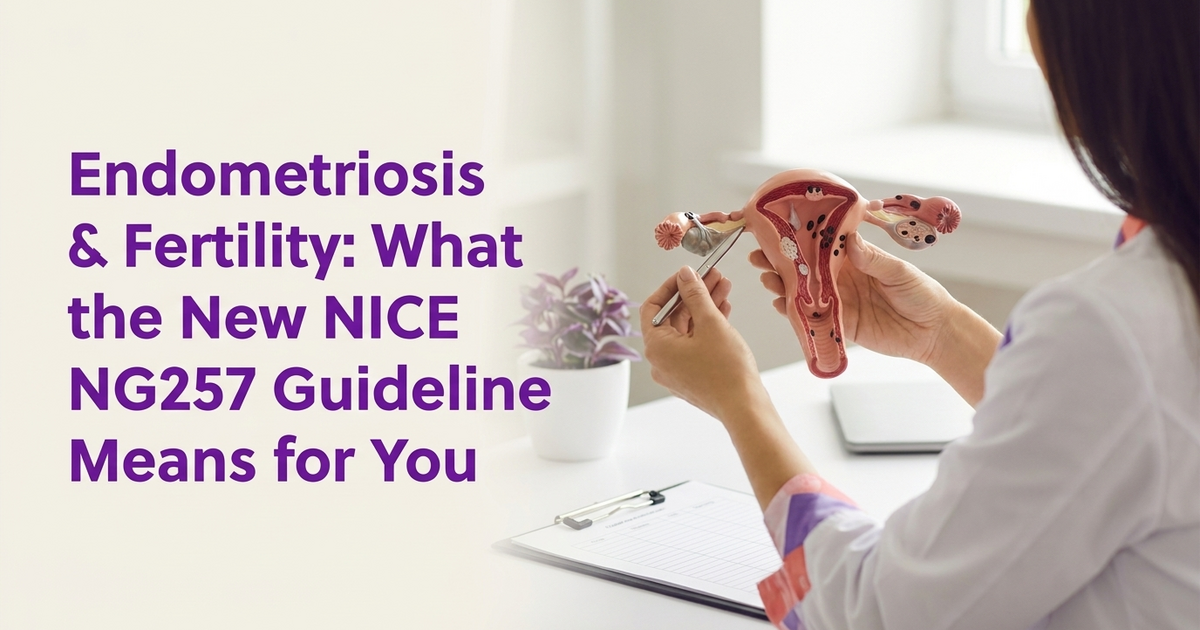
NICE's NG257 update gives endometriosis its own fertility pathway. See what changed, how the pathway works, and what it means if you're trying to conceive.
Yorkshire and Humber ICB's fund one NHS IVF/ICSI cycle, below NICE's recommended three. See the exact eligibility criteria, what counts as a cycle, and when private care makes sense.