Endometriosis and Fertility: What NICE's New 2026 Treatment Pathway Means for You
NICE's NG257 update gives endometriosis its own fertility pathway. See what changed, how the pathway works, and what it means if you're trying to conceive.
Read More

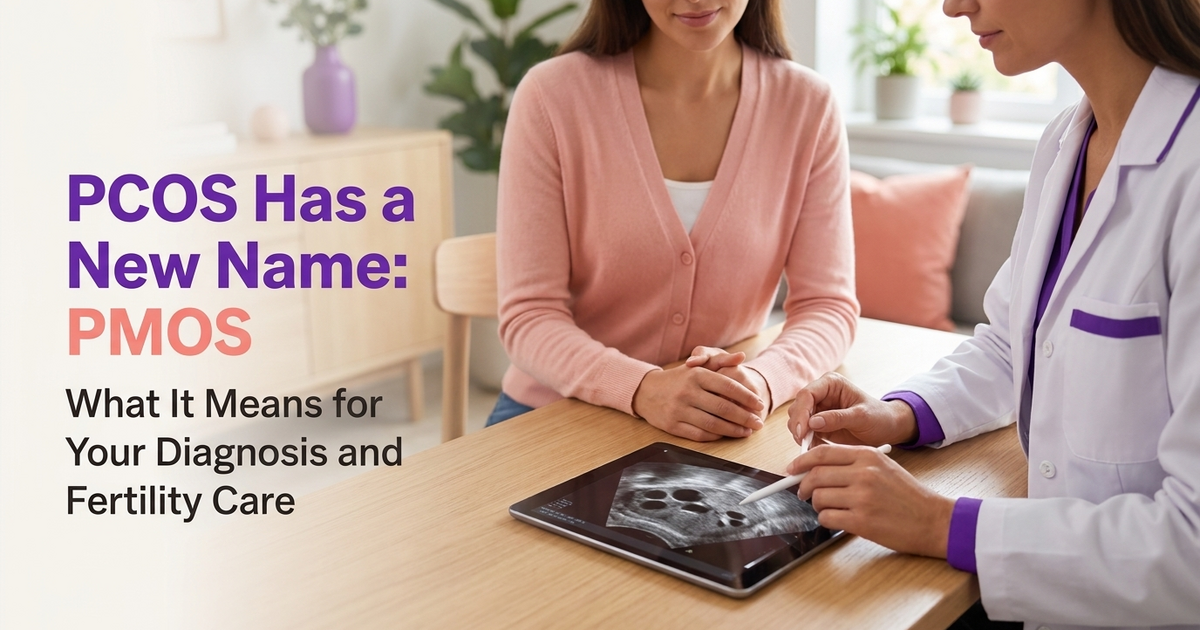


If you have a PCOS diagnosis, you may have seen the headlines: PCOS renamed PMOS is now official, following a global consensus published in The Lancet in May 2026. PMOS, formerly PCOS, affects around 1 in 8 women, more than 170 million people worldwide (Endocrine Society), so this is a change that touches a great many people, possibly including you. If you're wondering what it means for your own diagnosis, here's the short answer: nothing about your care changes overnight, and UK guidance bodies are now formally adopting the new name. This guide explains what PMOS stands for, how the new name was chosen, and what it means for your fertility care at JIVA.
PMOS stands for polyendocrine metabolic ovarian syndrome, the new name for the condition previously known as polycystic ovary syndrome (PCOS). It was announced through a global consensus published in The Lancet in May 2026 (The Lancet).
The old name implied the condition was defined by ovarian cysts. In practice, cysts are a misnomer.The name also missed the condition's wider hormonal and metabolic reach, things like insulin resistance and a higher long-term risk of cardiovascular disease, which are just as central to the condition as anything happening in the ovaries. PMOS was chosen to reflect that fuller picture.
This was not a quick rebrand. The new name followed a 14 year global consensus process, surveying more than 22,000 patients, clinicians and researchers, with more than 50 patient and professional organisations involved worldwide (Endocrine Society).
The selection criteria prioritised scientific accuracy, patient benefit, clarity and avoiding stigma. That is why the final name has three parts:
One of the clearest reasons for the rename is that this condition is not only a fertility-years condition. Early signs, irregular periods, acne, excess hair growth, can appear around puberty, often years before anyone is thinking about fertility at all.
The metabolic and cardiovascular effects don't stop once someone has had children, either. They continue well beyond the reproductive years, including around and after menopause. The old, ovary-only name never reflected that whole-life, whole-body pattern. PMOS does.
If you already have a PCOS diagnosis, it carries forward unchanged under the new name. You are not being asked to be retested, and there is no new diagnostic threshold to meet. A three year transition period runs to 2028, so you may see both PCOS and PMOS used in parallel for some time yet, in your own notes, in research and in patient information.
In the UK, NICE and the Royal College of Obstetricians and Gynaecologists (RCOG) have confirmed they are adopting the PMOS terminology. A draft NICE guideline was in public consultation from 1 July to 11 August 2026, with full publication expected on 9 December 2026 (NICE). RCOG has also welcomed the change (Pulse Today).
If you're on an NHS pathway to fertility treatment and PCOS or PMOS is affecting your ovulation, the name change alone does not affect your eligibility for NHS-funded IVF cycles, which continue to depend on your local integrated care board's criteria rather than on terminology.
Our consultant-led team is adopting the updated terminology as UK guidance confirms it, and we will keep using PCOS and PMOS interchangeably while both terms remain in circulation, so nothing gets lost in translation for our patients.
What does not change is how we approach your care. Whether your notes say PCOS or PMOS, your treatment stays personalised and evidence-based, built around you as an individual rather than a label. If you would like to read more about the condition itself, our guide on PCOS: A Common Condition That Deserves Better Understanding covers the basics, and our piece on PCOS, Fertility and Nutrition looks at how nutrition fits into managing it.
For anyone whose PCOS or PMOS is affecting their fertility, a consultation is the next step. If PCOS, now PMOS, is affecting your fertility, our consultant-led team can talk you through your options. Book a consultation with JIVA Fertility.
Do I need to be retested if I was diagnosed with PCOS?No. An existing PCOS diagnosis carries forward unchanged under the new PMOS name. The rename does not introduce a new diagnostic test or threshold, so there is no need to be retested just because the terminology has changed.
Will my medical records be updated to say PMOS?Not automatically, and not all at once. A three year transition period runs to 2028, during which PCOS and PMOS are both expected to appear in medical records, research and patient materials as UK services adopt the new term at their own pace.
Is PMOS a different or more serious condition than PCOS?No. PMOS is a new name for the same condition, not a new or more severe diagnosis. The name was changed to better reflect the condition's hormonal and metabolic reach, from adolescence into later life, not because the underlying condition itself has changed.
When will UK guidelines officially adopt PMOS?NICE's draft guideline was in public consultation from 1 July to 11 August 2026, with full publication expected on 9 December 2026. RCOG has also confirmed it is adopting the new terminology.
Disclaimer
We make every reasonable effort to ensure that the information contained in this article is accurate and up to date at the time of publication. However, medical knowledge, clinical guidelines, research findings, and statistics may change over time, and inadvertent errors or omissions may occur.
The information provided is intended for general educational purposes only and should not be relied upon as a substitute for professional medical advice, diagnosis, or treatment. Readers should consult a qualified healthcare professional regarding their individual circumstances.
Where statistics, research findings, or third-party information are referenced, we aim to cite reputable sources. We do not guarantee the completeness, accuracy, or continued availability of information obtained from third-party sources.
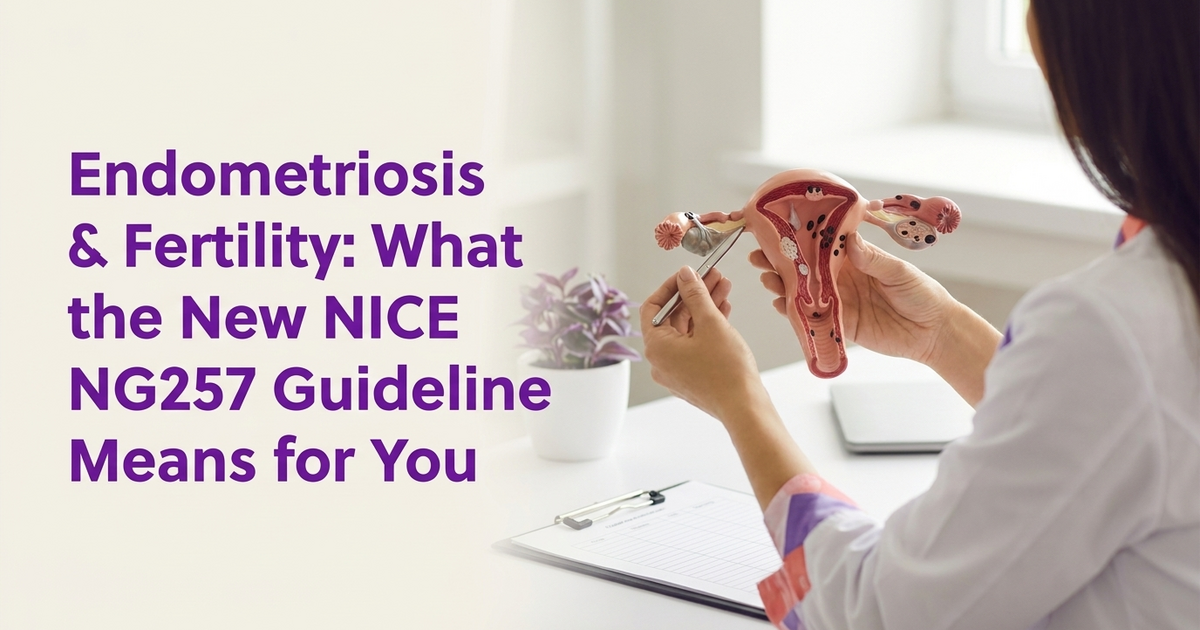
NICE's NG257 update gives endometriosis its own fertility pathway. See what changed, how the pathway works, and what it means if you're trying to conceive.
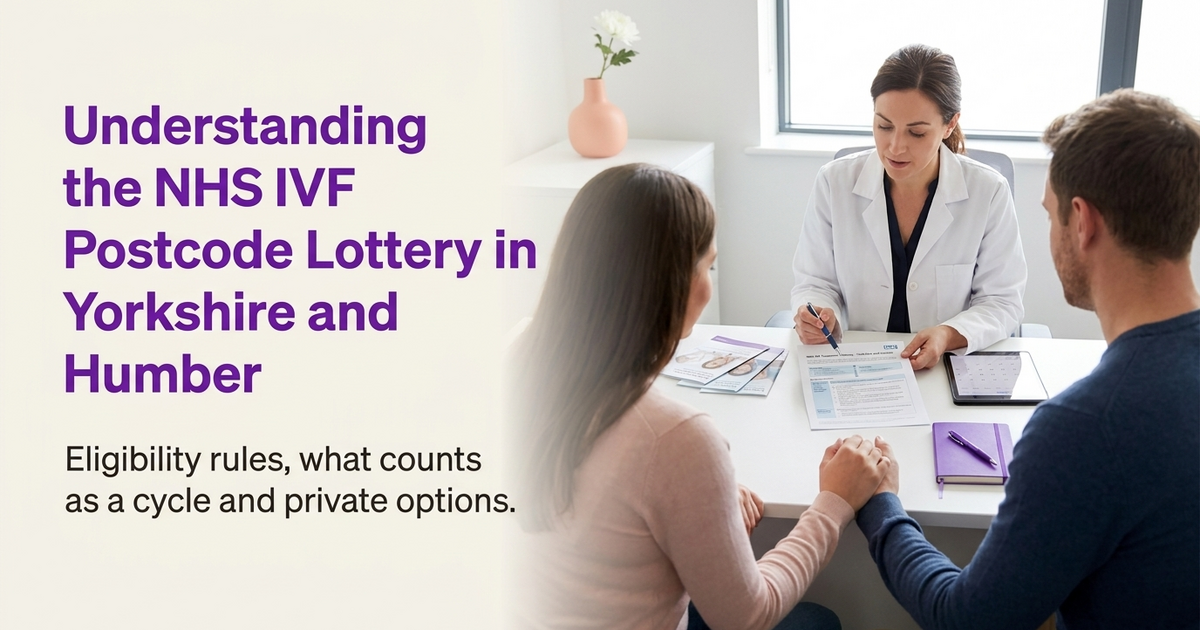
Yorkshire and Humber ICB's fund one NHS IVF/ICSI cycle, below NICE's recommended three. See the exact eligibility criteria, what counts as a cycle, and when private care makes sense.